
Why a Small Leak in Rawalpindi Homes Shouldn't Wait

A small leak under a sink or behind a wall is easy to ignore because it doesn't immediately stop anything from working. In practice, that's exactly what makes it expensive.
A tap still turns and water still reaches the kitchen, so a slow drip can feel like a minor annoyance rather than a problem that needs attention. The trouble is that water does not stay where it first appears. It follows gravity and seeps into joints and cracks, and while the household carries on as normal, the damp area quietly grows. Waiting does not make a leak cheaper.
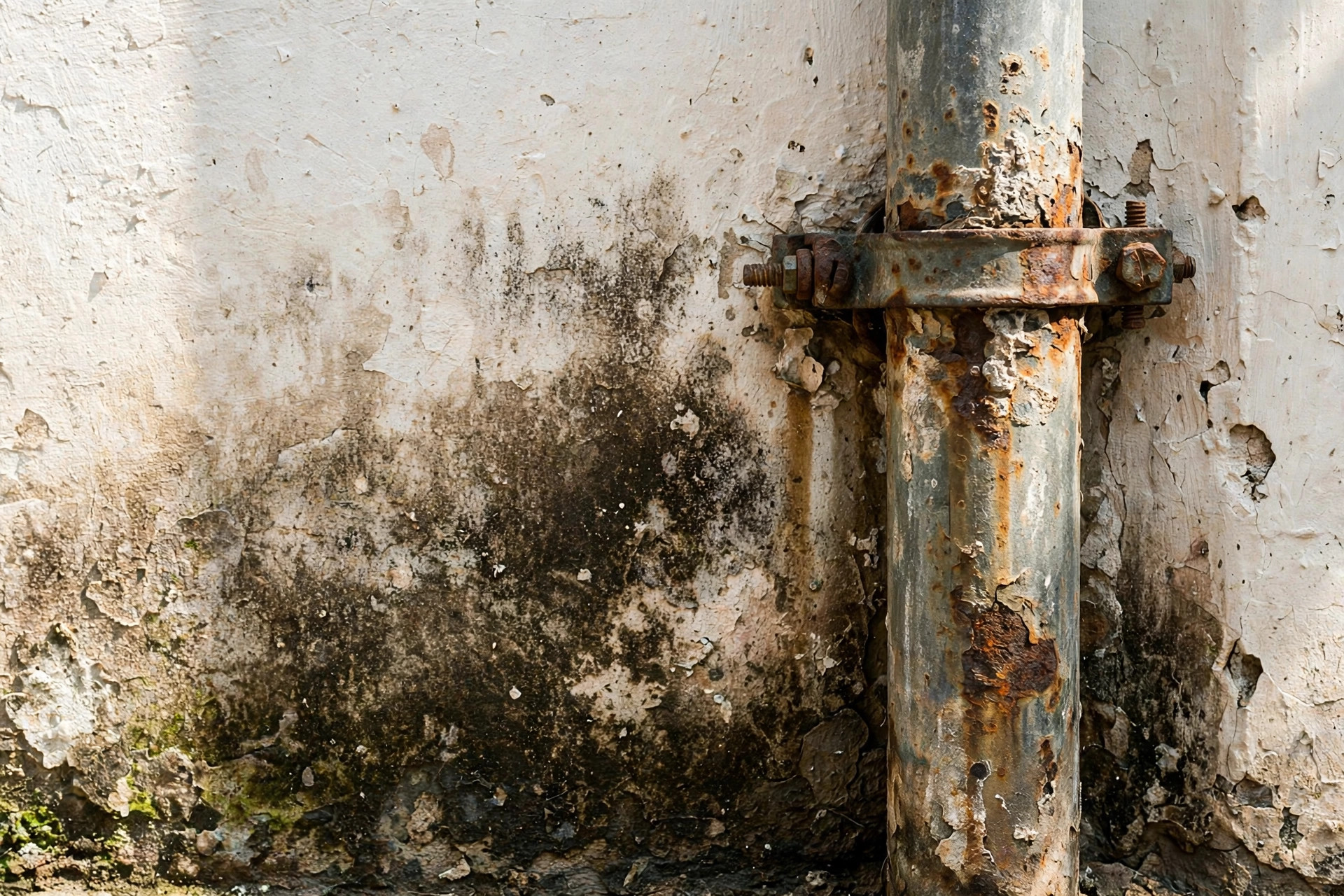
Warning signs to watch for
The earliest sign is often a damp patch that appears and does not fully dry. It may show on a wall, on a ceiling, or on the floor near a sink, a toilet, or a washing machine connection. The patch may feel cool or slightly soft to the touch, and paint or wallpaper over it may bubble, peel, or change colour. A patch that keeps returning after cleaning, or that slowly grows, is worth taking seriously.
A musty smell is another early warning. Damp plaster, damp wood, and damp fabric hold a smell that air freshener does not remove. The smell may be strongest in a bathroom, under a kitchen sink, or in a room below a bathroom. If a room smells damp even when it looks dry, water may be collecting out of sight.
A rising water bill can also point to a leak. When daily water use has not changed, yet the bill keeps climbing, water may be escaping somewhere in the system. A simple meter check can help. Turn off every tap and every water-using appliance, then look at the meter. If the meter is still moving, water is still flowing somewhere. That check does not show where the leak is, but it does show that the system is not holding water as it should.
How a small leak spreads
In many older Rawalpindi homes in Saddar and Cantt, galvanized pipes installed decades ago corrode from the inside — a leak can be active for months before a stain shows on a ceiling or wall. By that point the repair isn't just the pipe — it includes damaged plaster, flooring, or electrical wiring if the leak has been running near a wall socket.
Damage from a leak spreads room by room because water does not respect the boundary of one wall or one floor. A leak in a bathroom can travel down through the ceiling into the room below. A leak under a kitchen sink can soak the cabinet base, then the floor beneath it, and then the wall behind it. Once plaster is wet for a long time, it softens and crumbles. Once a wooden floor or door frame stays damp, it can swell, warp, and lose its shape. Once water reaches wiring, the risk is no longer only about repair cost, because damp wiring needs careful handling and should not be left in use without inspection.
The spread is slow, which is part of the problem. A stain on a ceiling may be the first visible sign of a leak that has already been running above it for weeks. Opening up a wall to reach a pipe, drying the area properly, and making good the plaster and paint all add to the work, and each step is easier when the wet area is still small.
What an inspection covers
An inspection starts with the visible signs. The technician looks at damp patches, checks the condition of plaster and paint, and notes where water has travelled. The fittings around sinks, toilets, and washing machine connections are checked for loose joints, worn seals, and corrosion. The pipes that can be seen are checked for dampness, staining, and weak spots, and the areas around them are checked for softness or swelling.
The inspection then moves to the parts of the system that are harder to see. The water meter is checked with taps closed, to see whether water is still moving. The pressure in the system is considered, because a drop in pressure can point to a leak in a hidden run of pipe. The route of the pipe is traced as far as it can be followed, so that the likely source can be narrowed down before any wall or floor is opened. The aim is to find the source, not simply to treat the stain where the water finally appears.
After the inspection, the homeowner should understand where the leak is, what has been damaged so far, and what needs to happen next. A small repair may involve tightening or replacing a fitting, replacing a short section of pipe, or renewing a seal. Knowing the source first keeps the repair focused, and it avoids opening up more of the house than the job requires.
| Service | Price |
|---|---|
| Visit and diagnosis | From Rs 800 (waived if you proceed with the repair) |
| Tap and leak repairs | Rs 1,200–3,500 |
Practical takeaway: any leak is worth a same-week inspection. A standard visit starts from Rs. 800 (waived if you proceed with the repair).