
Leather Sofa Cleaning in Islamabad: Fabric vs Leather Care, Cost per Seat & What to Expect

Leather and fabric sofas need completely different cleaning, and using the wrong method on either one causes damage that is hard to undo. A fabric sofa is cleaned by deep extraction, where cleaning solution is worked into the fibres and then pulled out with the dirt, while a leather sofa is cleaned by hand with a gentle leather cleaner and then conditioned to keep the surface soft and crack-free. Leather should never be soaked the way fabric is, and fabric should never be treated with leather conditioner. Before booking, check which material your sofa actually is, because many sofas sold in Islamabad combine a leather-look surface with fabric sides, and each part needs its own treatment.
Fabric sofas: deep extraction cleaning
Fabric sofas are the most common type in Islamabad homes, and they collect dust faster than most owners realise. Cotton, linen, velvet, chenille and suede all trap dust, pollen and everyday spills deep in the fibres, and Islamabad dust levels mean a light-coloured fabric sofa can look tired within a few months even in a home that is cleaned daily. Deep cleaning lifts the embedded dirt that vacuuming cannot reach, and it also removes the odours that build up from cooking, pets and everyday use. Velvet and suede need a gentler approach with lower moisture and a soft brush, while plain cotton and linen can take a fuller extraction clean. The result you should expect is a visibly brighter fabric, a fresher smell, and a sofa that dries the same evening when the work is done with low-moisture extraction.
Leather sofas: care, not force
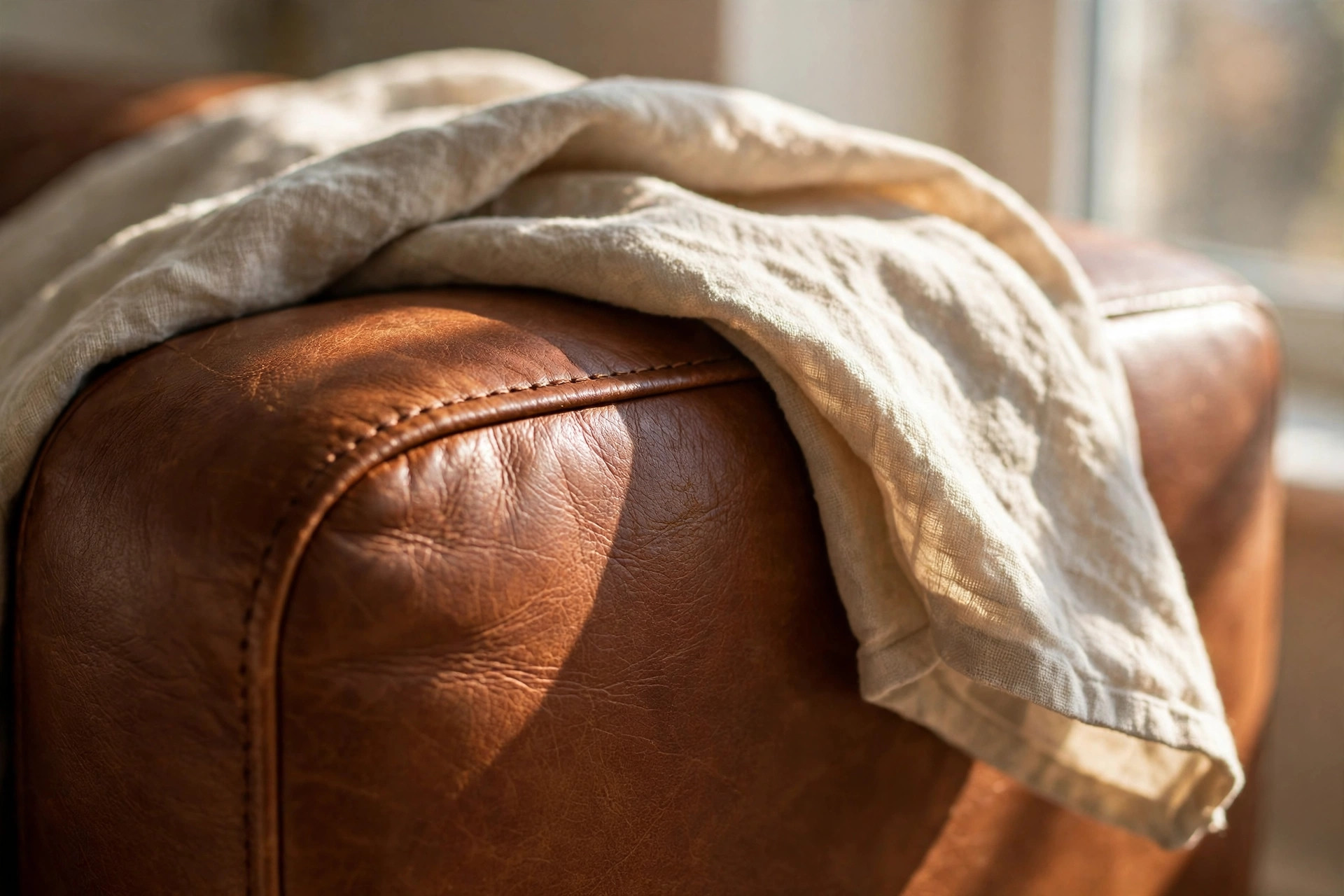
Leather sofas need care rather than force. Real leather is a natural material that dries out in Islamabad summers and in rooms heated through winter, and dry leather cracks along the seat edges and armrests first. A proper leather clean starts with a gentle wipe to lift surface dust and body oils, then a leather-safe cleaner applied by hand, then a conditioner that restores the oils the leather has lost. The conditioner is what keeps the surface supple and stops the fine cracks that make an old leather sofa look worn. Harsh household cleaners, bleach, and all-purpose sprays should never touch leather, because they strip its protective finish and leave it dull and brittle. If your sofa is bonded leather or faux leather rather than full grain, the cleaner should know, because those materials need an even gentler touch.
Stains behave differently on the two materials, and the right response in the first minutes matters. On fabric, blot a spill immediately with a clean cloth and never rub it, because rubbing pushes the stain deeper into the fibres and spreads it wider. Chai, curry and food stains are the most common calls we see in Islamabad homes, and they respond best to a professional extraction clean if they are treated within a day or two. On leather, wipe a spill off at once with a slightly damp cloth and let it air dry, because leather absorbs liquid slowly and a quick wipe usually prevents any mark. Ink, oil and dye transfer from new jeans are the hard stains on leather, and they need a specialist leather treatment rather than a household remedy. Never use nail polish remover, vinegar or baking soda paste on leather, because all three damage the finish.
The condition of the sofa before cleaning also decides how good the result will be, and an honest cleaner will tell you this before starting. A fabric sofa that has never been deep-cleaned in five years will improve a lot, but a stain that has been baked in by years of sun through a window may lighten rather than disappear completely. A leather sofa with cracked, peeling or flaking patches cannot be restored to new by cleaning alone, because the surface layer itself is damaged and needs repair work beyond cleaning. Pet odours usually lift well with a proper clean, while a sofa that has been soaked by a leaking roof or a burst pipe may need drying and treatment before any cleaning starts. Ask for a realistic expectation before the work begins, not a promise that every mark will vanish.
Preparing for a cleaning visit is simple and makes the job faster. Clear the cushions, remove small items from the sofa, and make space around it so the cleaner can reach all sides, including the back and the base. If the sofa is against a wall, pull it out a few inches so the back and the floor underneath can be reached. Keep pets in another room during the visit, both for their safety and so the cleaning is not interrupted. After the clean, keep windows open for airflow and avoid sitting on a fabric sofa until it is dry to the touch, because sitting on damp fabric presses dirt back into the fibres. Leather sofas can be used again once the conditioner has been absorbed, usually within an hour or two.
What sofa cleaning costs
| Service | Price |
|---|---|
| Sofa cleaning | From Rs 600 per seater |
| Standard five-seater sofa | Rs 2,500–Rs 4,000 |
| Carpet cleaning | From Rs 60 per square foot |
| Water tank cleaning | From Rs 2,500 |
Leather cleaning is priced by the same per-seat basis, with the conditioner included, and the exact price is confirmed before work begins once the material and condition have been checked. Every job carries a 15-day workmanship warranty.
Call or WhatsApp RehmanRepairs on 0316 2613726 to book a sofa cleaning in Islamabad or Rawalpindi, and tell us whether your sofa is fabric or leather, how many seats it has, and whether there are any stains or odours to treat. We cover F-6, F-7, F-8, F-10, F-11, G-6, G-9, G-10, G-11, G-13, G-15, E-7, E-11, I-8, I-9, I-10, DHA, Bahria Town and Bani Gala in Islamabad, and Saddar, Satellite Town, Westridge, Chaklala, Cantt, Gulraiz, Bahria Town, Adiala Road and Sadiqabad in Rawalpindi. Book before 4 PM for same-day service, Monday to Sunday, 8 AM to 10 PM, from our office at Office 12 Blue Area Islamabad.