
How to Remove Stains from Your Sofa in Islamabad: Chai, Food & Pet Stains — DIY vs Professional Cleaning

Chai, food, and pet stains on a sofa need different treatment, because what removes a chai stain can set a pet stain, and what works on fabric can damage leather.
- The first rule for every stain is to blot, never rub, because rubbing pushes the stain deeper into the fibres and spreads it wider.
- The second rule is to test any cleaning solution on a hidden corner first, because a solution that is safe on one fabric can bleach or stiffen another.
- The third rule is to act fast, because a stain that has dried and set for weeks is far harder to remove than one treated the same day.
Chai and food stains
Chai and doodh patti stains are the most common sofa stains in Islamabad homes, and they are also among the easiest if caught early. Blot up as much liquid as possible with a clean white cloth, then dab with a little cold water and a mild detergent solution, working from the outside of the stain towards the centre so it does not spread. Rinse by dabbing with clean water and blot dry. Do not use hot water on a chai stain, because heat sets the tannin in the tea and makes the mark permanent. If the stain has dried, it may need a second pass, and if it has been there for weeks, a professional extraction clean is usually the only way to lift it fully.
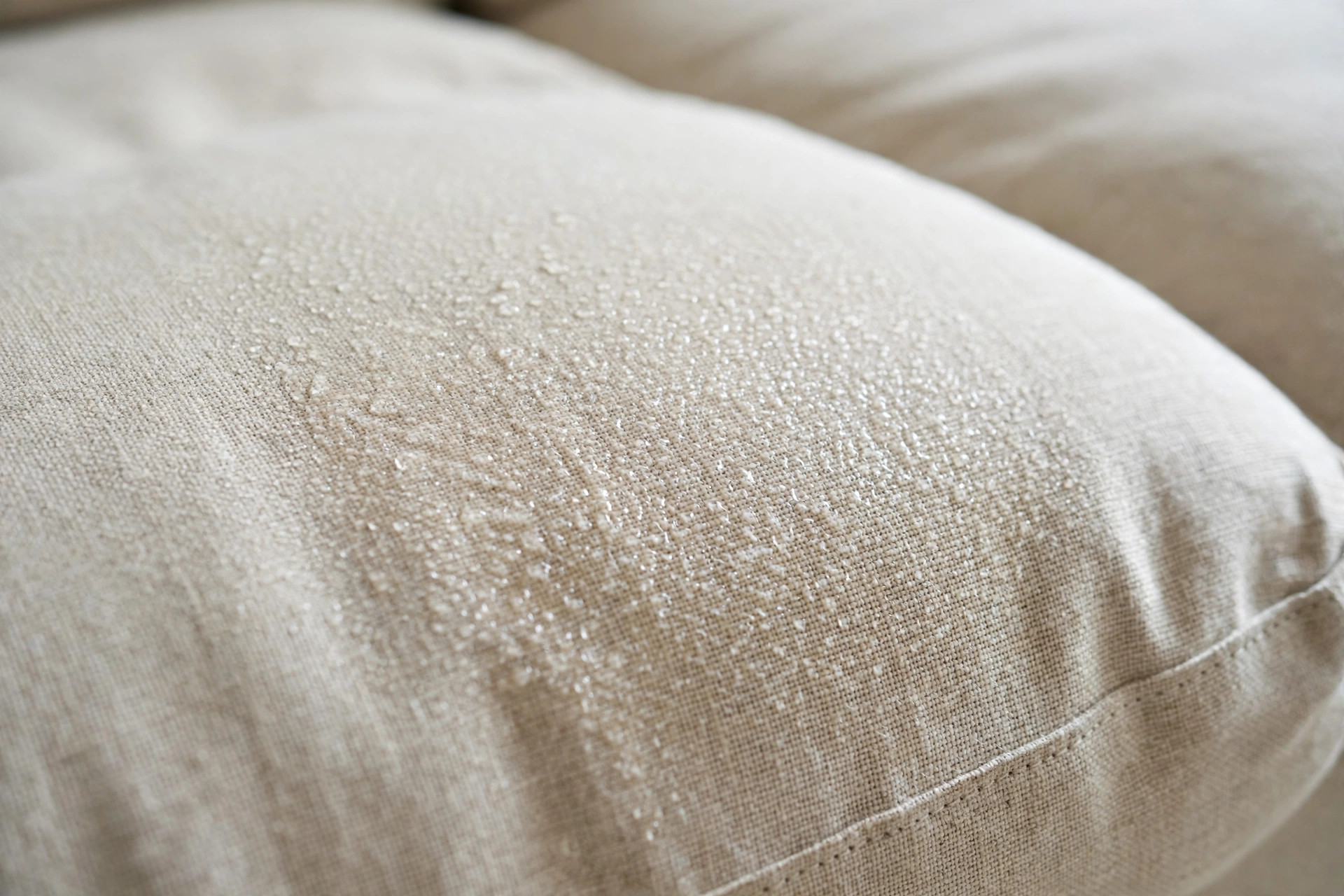
Food stains depend on what the food was. A dry crumb or biscuit mark usually lifts with vacuuming and a light dab of detergent solution. An oily stain, from paratha, curry, or fried food, needs a different approach: blot the oil, sprinkle a little baking soda or cornflour to absorb it, leave it for fifteen minutes, vacuum it off, and then dab with detergent solution. A curry or haldi stain is the hardest food stain, because turmeric dyes the fibre, and it should be treated quickly with cold water and detergent before it sets. Never use bleach on a coloured sofa, because it will take the colour out of the fabric along with the stain.
Pet stains
Pet stains need care for two reasons: the stain itself and the smell. Blot up the liquid, then clean with cold water and a mild detergent, and follow with a solution made for pet stains, because ordinary detergent removes the visible mark but leaves the odour, and the pet will return to the same spot. Do not use ammonia-based cleaners, because the smell resembles urine to a pet and encourages repeat marking. If the stain has soaked into the cushion, surface cleaning will not be enough, and the cushion needs a deep extraction clean that reaches the filling. Homes with pets in Islamabad should plan a professional deep clean every three months, because pet hair and dander build up even where there is no visible stain.
The fabric of your sofa decides what is safe to use. Fabric and chenille sofas take water-based cleaning well, velvet needs a gentler touch and should never be soaked, and leather needs a dedicated leather cleaner, never water and detergent, because water marks leather and detergent strips its finish. Suede is the most delicate of all and should not be cleaned with water at all. If you do not know the fabric, check the care label under a cushion, and if there is no label, test on a hidden area and wait for it to dry before cleaning the stain. Using the wrong method on the wrong fabric can cause more damage than the stain itself.
When to call a professional
There is a clear line between a stain you can treat yourself and one that needs a professional. A fresh, small stain on a fabric sofa is a DIY job. A large stain, a stain that has set, a stain on velvet, leather, or suede, or a stain with a smell that will not go away are professional jobs, because a professional clean uses hot water extraction that reaches deep into the fibres and removes what surface dabbing cannot. A professional can also treat the whole sofa, not just the stain, so you do not end up with a clean patch surrounded by a dirty sofa, which is the most common result of spot cleaning.
Between professional cleans, a few habits keep a sofa looking better for longer. Vacuum the upholstery weekly with a brush attachment, because dust and grit wear the fibres and make stains harder to remove. Treat spills immediately rather than leaving them for the weekend. Keep food and chai away from light-coloured sofas where possible, and use washable throws on the seats that get the most use. In Islamabad, where dust levels are high and windows are often open, these habits matter more than in a dust-free climate, and they stretch the time between deep cleans by months.
| Service | Price |
|---|---|
| Sofa cleaning | From Rs 600 per seater |
| Five-seater sofa | Rs 2,500 to Rs 4,000 |
| Carpet cleaning | From Rs 60 per square foot |
A stain that needs a deep extraction clean is priced on the same basis, and the exact price is quoted after inspection and confirmed before work begins, because the fabric type and the size of the stain change the work involved. No work starts without a confirmed price.
If the problem is still there after the basic checks, call RehmanRepairs on 0316 2613726 or message us on WhatsApp at wa.me/923162613726. Our office is Office 12 Blue Area Islamabad, we work Monday to Sunday from 8AM to 10PM, and every job carries a 15-day workmanship warranty. Book before 4 PM for same-day service in Islamabad and Rawalpindi.