
Gas Geyser Not Heating in Islamabad: Pilot, Thermocouple & Burner Problems Explained

A gas geyser that is not heating in Islamabad usually has one of four causes:
- The pilot flame will not stay lit.
- The thermocouple has failed.
- The burner is dirty or blocked.
- The gas pressure is too low. If the pilot lights and goes out as soon as you release the knob, the thermocouple is the likely fault. If the pilot will not light at all, the problem is usually the gas supply or the pilot assembly itself. If the burner lights but the water stays lukewarm, the burner or the thermostat is the place to look. Knowing which symptom you have saves time, because each one points to a different repair.
The pilot light
The pilot light is the small flame that stays lit so the burner can ignite when you open a hot tap, and it is the most common source of geyser trouble. A pilot that keeps going out is usually caused by a weak thermocouple, a dirty pilot orifice, or a draught blowing the flame away from the sensor. In winter, the first cold weeks bring a wave of these calls, because geysers that sat unused all summer have dust in the pilot assembly and the thermocouple has weakened. Cleaning the pilot orifice and checking the flame position are small jobs, but they need a technician who works with gas, because a wrong adjustment can leave gas leaking.
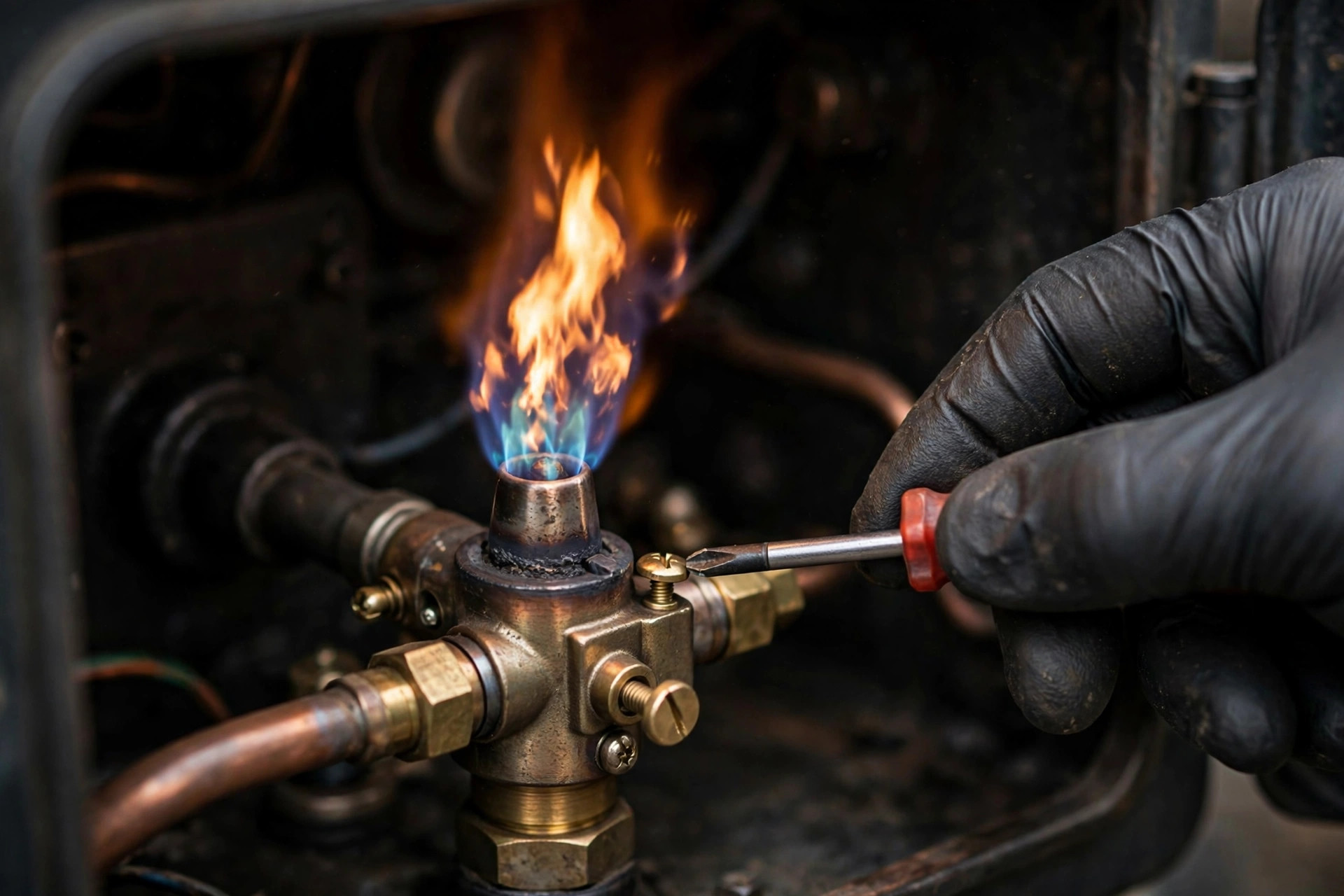
The thermocouple is a small safety device that sits in the pilot flame and tells the gas valve it is safe to stay open. When it wears out, it stops sending the signal, and the valve shuts the gas off as soon as you release the knob. This is the fault behind the classic complaint of holding the knob for a minute and the pilot still dying. Thermocouples are a standard replacement part on Rinnai, Nasgas, Sona, and Canon geysers, and the repair is quick once the fault is confirmed. A thermocouple should never be bypassed or jammed open, because it is the device that stops gas flowing when the flame goes out.
Burner problems
Burner problems show up differently. A burner that is dirty or partially blocked gives a yellow, lazy flame instead of a sharp blue one, and the water heats slowly or not at all. A burner with a damaged gas valve may not open fully, and a thermostat that has failed may cut the burner off too early. If the flame is yellow, or you can smell gas near the geyser, switch the geyser off and ventilate the room before doing anything else. A yellow flame can also mean incomplete combustion, which produces carbon monoxide, so this is not a fault to ignore or to fix with a quick adjustment by someone untrained.
Low gas pressure in winter is a separate cause, and it affects whole streets rather than single houses. In the coldest weeks, gas pressure drops across Islamabad, and geysers that worked fine in autumn suddenly cannot heat water properly. The signs are a weak pilot, a burner that will not stay on, and the same problem at the neighbours. No repair to the geyser will fix a supply pressure problem, and a good technician will tell you that honestly rather than replacing parts that are not faulty. In this case, using the geyser at off-peak hours or fitting a proper gas pressure solution are the options worth discussing.
There are a few safe checks you can do before calling a technician. Confirm that the gas supply to the geyser is on and that other gas appliances in the house are working. Check that the water supply to the geyser is on and the inlet filter is not blocked, because a geyser with no water flow will not fire. Look at the pilot flame through the viewing window without opening the unit, and note whether it is blue or yellow and whether it stays lit. Do not open the geyser body, do not adjust the gas valve, and do not try to light the burner manually, because gas work done wrong is dangerous in a way that electrical or plumbing mistakes are not.
Geyser safety deserves a short word of its own. A geyser should be installed in a ventilated space, never in a closed bathroom with no airflow, and the flue or exhaust must be clear. If you smell gas, do not switch any electrical device on or off, open the windows, turn off the gas supply if you can do so safely, and leave the area before calling for help. Annual servicing before winter, including a burner clean and a thermocouple check, prevents most of the faults described here and is far cheaper than an emergency repair on a cold morning.
What it costs
| Service | Price |
|---|---|
| Geyser diagnosis | From Rs 800 |
| Geyser repairs | Rs 1,500 to Rs 4,000 |
| Heater repairs | Rs 1,200 to Rs 3,500 |
| Low gas pressure (a supply problem, not the geyser) | No repair charged |
If the problem is still there after the basic checks, call RehmanRepairs on 0316 2613726 or message us on WhatsApp at wa.me/923162613726. Our office is Office 12 Blue Area Islamabad, we work Monday to Sunday from 8AM to 10PM, and every job carries a 15-day workmanship warranty. Book before 4 PM for same-day service in Islamabad and Rawalpindi.