
AC Not Cooling? 3 Things to Check Before Calling a Technician

Before booking a technician, a few quick checks rule out the easiest causes.
Start With the Filter
The filter is the first place to look, because it catches dust before it reaches the rest of the indoor unit, and that dust builds up with normal use. When the filter is clogged, air cannot pass through freely, so the room feels warm even when the unit is running, and the airflow from the indoor unit feels weak. Switch the unit off before you touch the filter, then open the front panel of the indoor unit and slide the filter out gently. Hold it up to the light and look through it. If you can barely see light through it, or if it is covered in a grey layer of dust, it needs cleaning.
Cleaning the filter is a simple job. Rinse it gently with clean water until the dust is gone, and let it dry fully before you put it back. Do not put a wet filter back into the unit, and do not run the unit without the filter in place. Once the filter is dry and back in place, switch the unit on again and give it time to cool the room.
First, check the filter — a clogged filter is the single most common reason a Gree, Haier, or Dawlance AC blows warm or weak air, and cleaning it is a five-minute job. Second, check the outdoor unit isn't blocked by debris. Third, confirm the thermostat is set below room temperature and in cooling mode.
Check the Outdoor Unit and the Thermostat
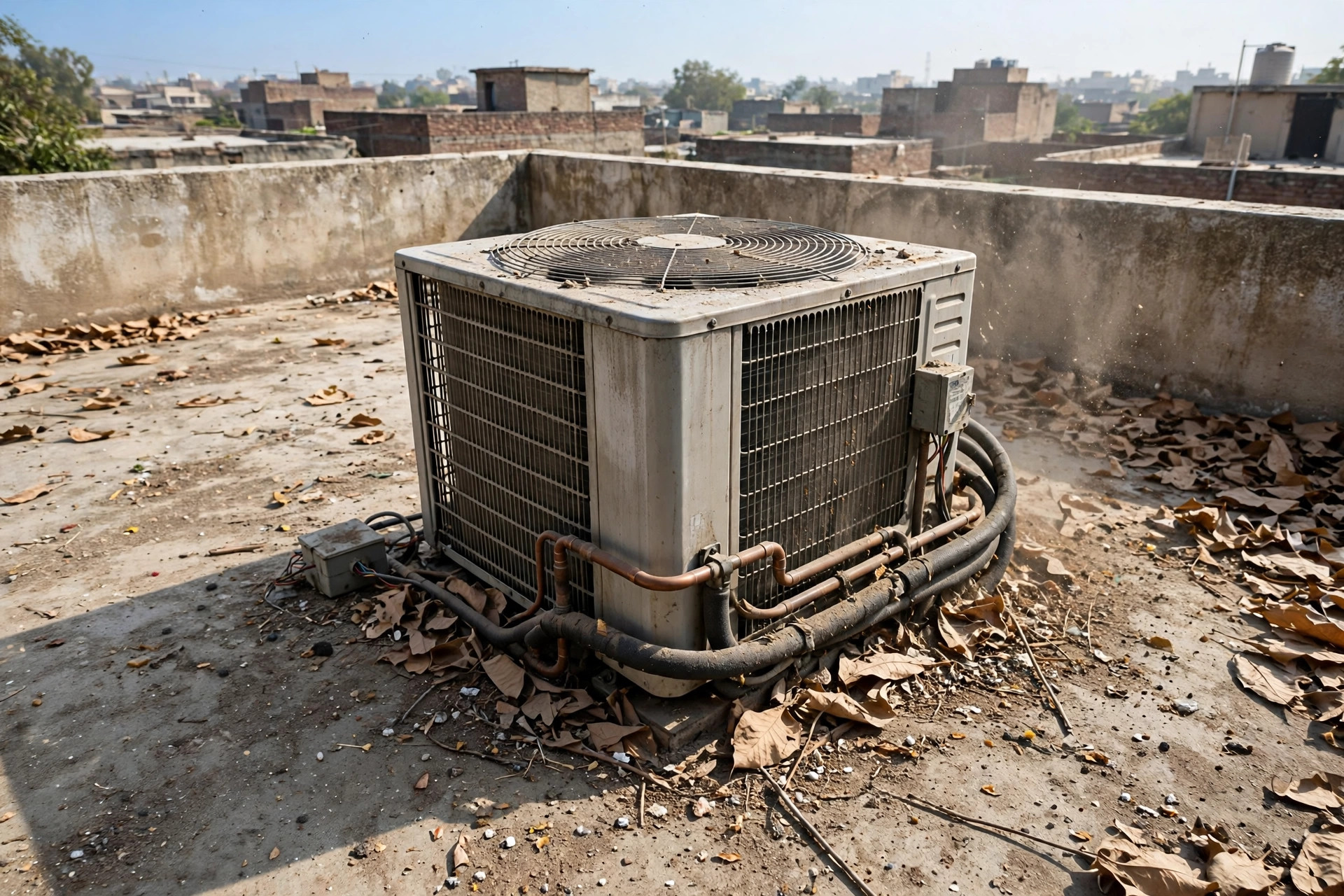
The outdoor unit needs clear space around it to work properly. Walk outside and look at the unit from a safe distance. Leaves, dust, and other debris can collect around it, and plants or stored items placed too close can block the airflow that carries heat away from the unit. Clear away anything resting against the unit, and make sure air can move freely around it. Do not open the casing of the outdoor unit, and do not reach inside it. If it is silent while the indoor unit is running, or if you can see damage, leave it alone and note what you saw for the technician.
The thermostat is the next check, and it is easy to get wrong without noticing. Look at the setting on the remote or on the wall control and confirm that the unit is in cooling mode, not in fan mode or heating mode. Then check that the set temperature is below the temperature of the room. If the set temperature is higher than the room temperature, the unit will not try to cool, even though it looks switched on. Lower the setting below room temperature, make sure the mode is cooling, and give the unit time to respond. A unit that has just been switched on, or that has just had its setting changed, needs time before the air from it feels cold.
When to Stop and Call for an Inspection
If the filter is clean, the outdoor unit is clear, and the thermostat is set correctly, yet the air is still not cold, the cause is likely deeper inside the unit. At that point, further checks will not help, and opening sealed parts or trying to add gas yourself can make the fault worse and can be unsafe. Listen as well as feel. A unit that cools weakly but runs quietly is different from a unit that has started making a new sound, and both are worth describing clearly when you book the inspection, so the technician knows what to look for first.
If the unit is running but the air isn't cold, and the filter and outdoor unit are clear, it's very likely a refrigerant or compressor issue — at that point, stop troubleshooting yourself. If the unit is making a new grinding or clicking noise, switch it off entirely — this is often an early compressor warning sign on Samsung and LG inverter units.
A grinding or clicking noise that was not there before is a clear sign to stop using the unit. Switch it off entirely and do not keep running it to see if the noise goes away, because a compressor fault can get worse the longer the unit runs. Note when the problem started, whether the air is warm or only slightly cool, and whether the noise happens all the time or only when the unit starts. Those details help the technician during the inspection.
| Service | Price |
|---|---|
| Inspection and service visit | From Rs 1,500 |
| R22 gas charging | From Rs 2,000 |
| R410A gas charging | From Rs 3,500 |
An inspection is the right next step when the simple checks have not fixed the problem. The technician can check the refrigerant, the compressor, and the parts that cannot be checked safely from outside the unit, and can then explain what needs to be done. Booking an inspection does not mean agreeing to a repair on the spot.
If you've checked all three and the issue persists, it's time to book a proper inspection.